Nurture and Nature: Loving the Land

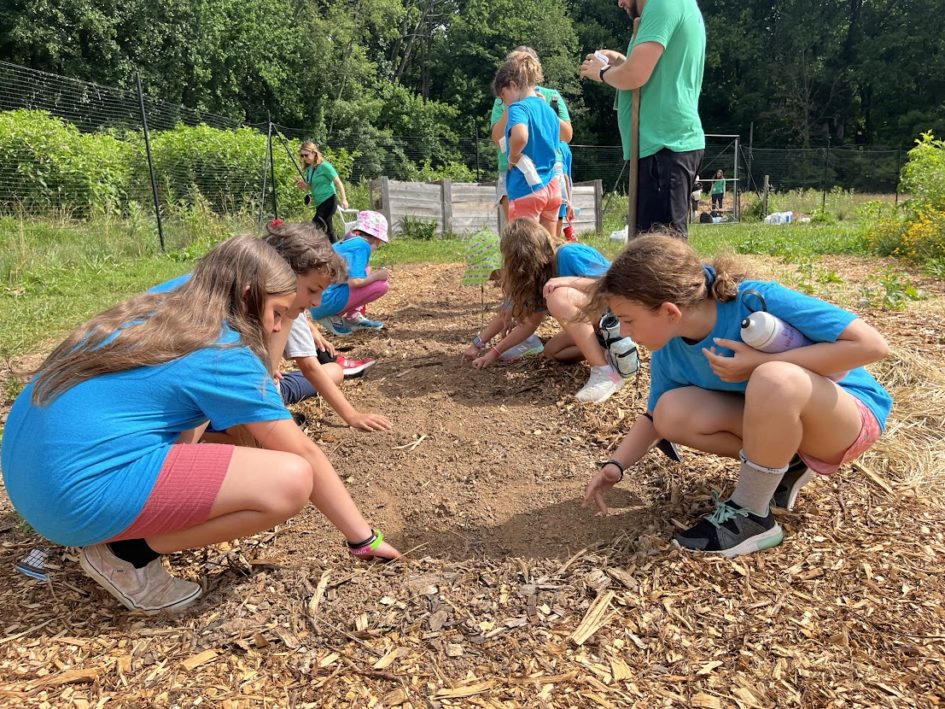
Children wearing blue shirts crouch down in a garden, using their hands to dig and explore the soil on a mulched path, possibly participating in an outdoor educational or gardening activity.

One of the highlights of our Wellspring location is the 200 acres of outdoor space.  Exploring and understanding our landscape is at the forefront of our teva (nature) program.  Specifically, with our summer theme of Ahavat HaAdamah (loving the earth), our chanichim (campers) are learning to care for and appreciate our beautiful campus.

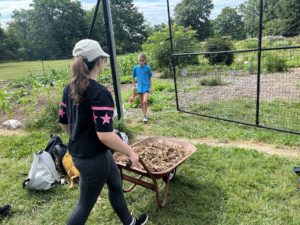
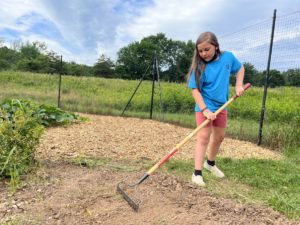
Children wearing blue shirts crouch down in a garden, using their hands to dig and explore the soil on a mulched path, possibly participating in an outdoor educational or gardening activity.   A girl in a black shirt and light gray cap pushes a wheelbarrow filled with mulch along a grassy path in a fenced garden, while another girl in a blue shirt stands ahead by the open gate.   A young girl wearing a blue shirt and red shorts rakes soil in a garden on a sunny day, surrounded by greenery and a wire fence in the background.

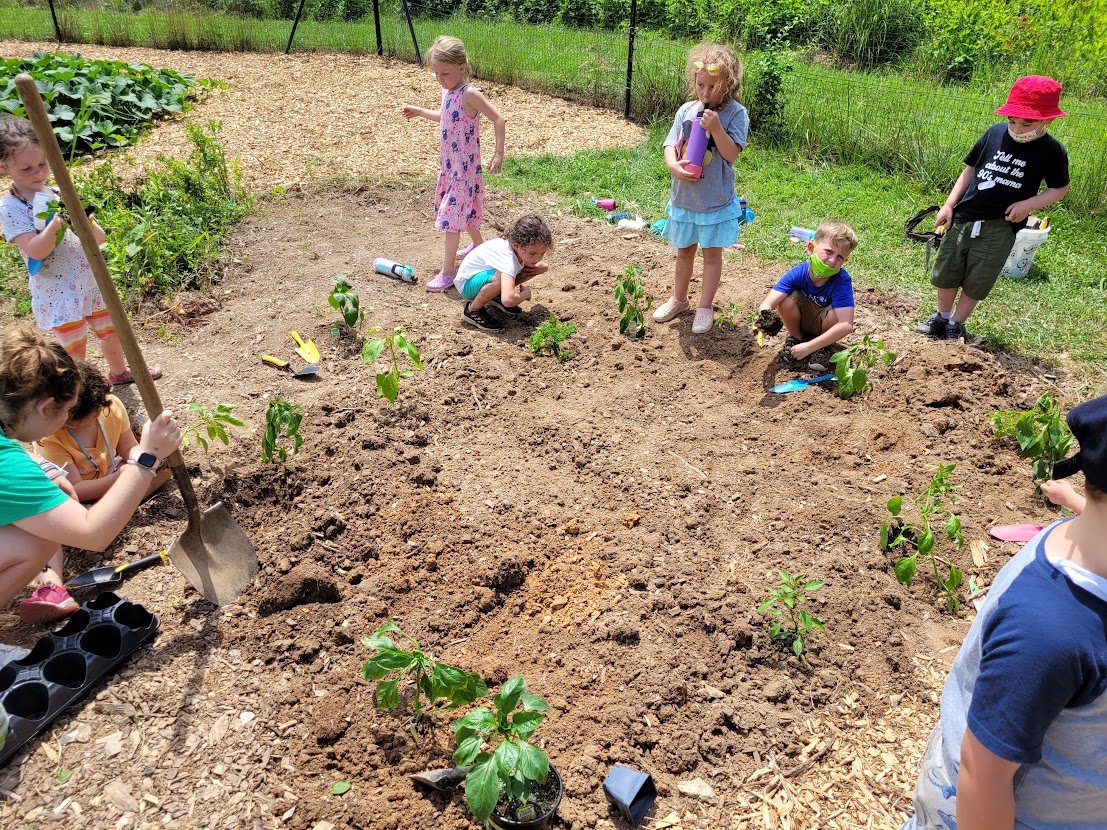
At the root of our teva program is the gan (garden).  Each summer, camp is given a plot of land in the Wellspring garden.  During chugim (electives) and z’man migvan (group time), our chanichim learn how to cultivate the gan.  The first week of camp was spent weeding our new space.  In recent weeks, chanichim have been busy planting and learning how to care for the crops.  We are already seeing the fruits of our labor – our radishes have sprouted and we are seeing little peppers on the vine.  We learned that planting marigolds next to these plants helps protect them from pests.
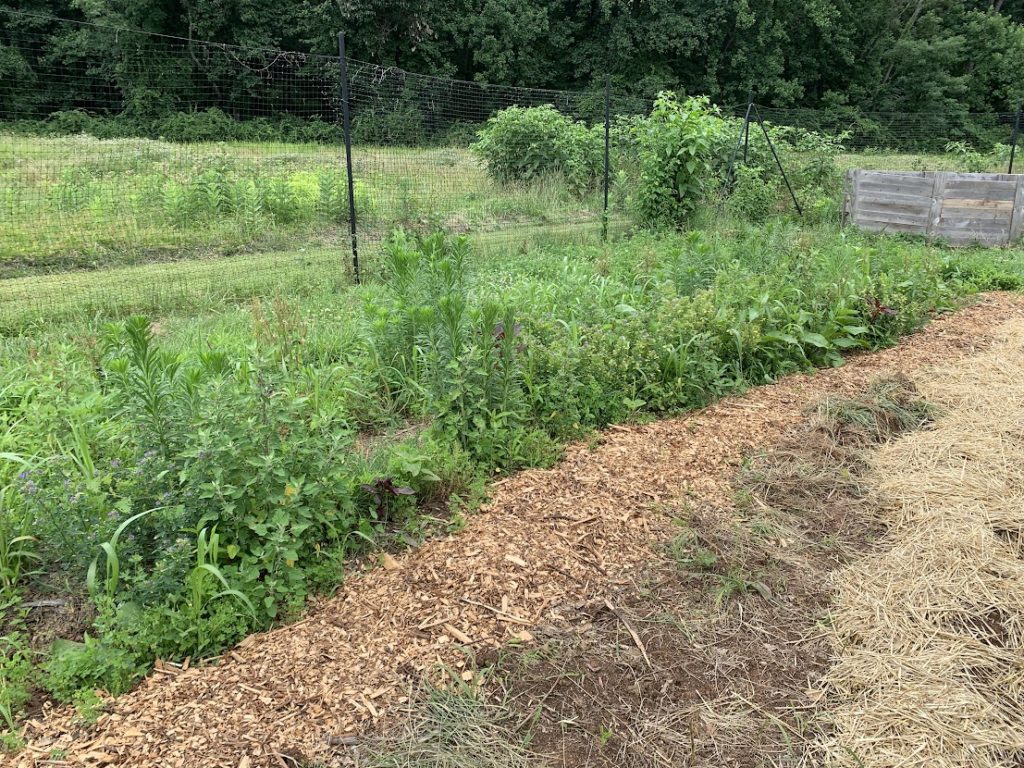
A garden bed with dense green weeds and plants growing along a wood-chip path, bordered by a wire fence, with trees and tall grass in the background and a compost bin on the right.   A group of young children garden together outdoors, digging and planting small plants in soil on a sunny day. Gardening tools and plant pots are scattered around the garden bed.

While physically caring for the garden is important, we are also learning how to live mindfully in nature.  Chanichim are painting rocks with positive sayings because of a belief that speaking kindly to plants helps them grow – a lesson that will resonate with chanichim beyond the gan.
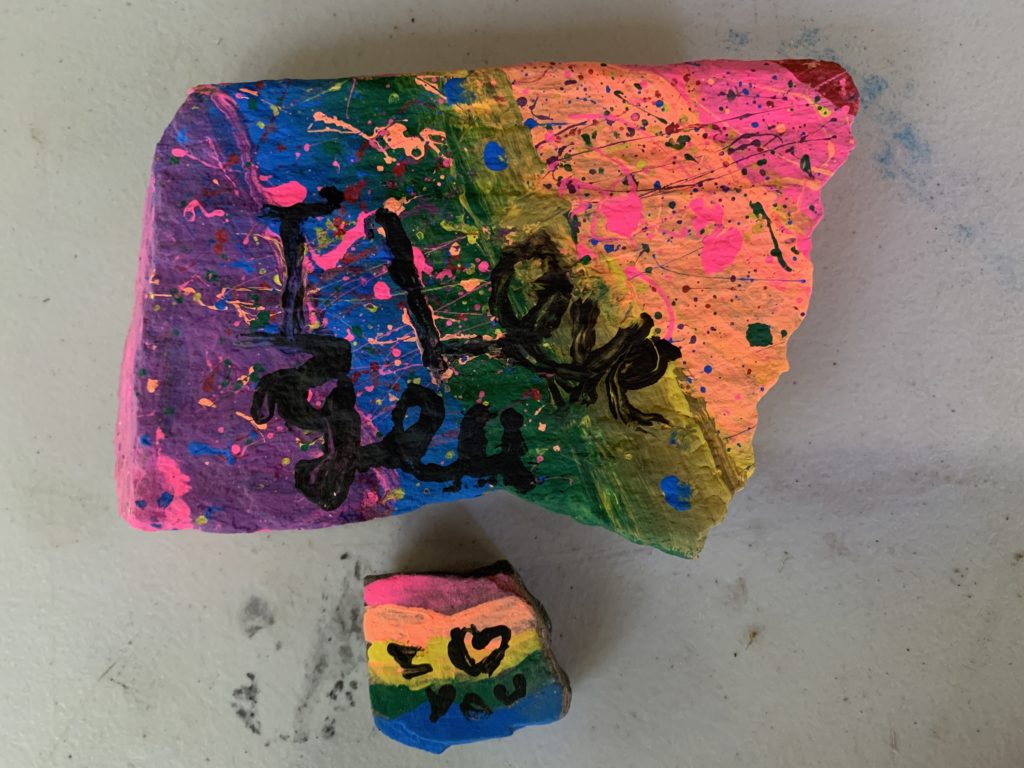
Two painted rocks on a light surface. The larger rock is decorated with vibrant rainbow colors and splatters, with I love you written in black. The smaller rock has rainbow stripes and a heart with the words I ♥ you.

Because it is also a shmitah (sabbatical year), we are leaving a section of our gan untouched to rest.
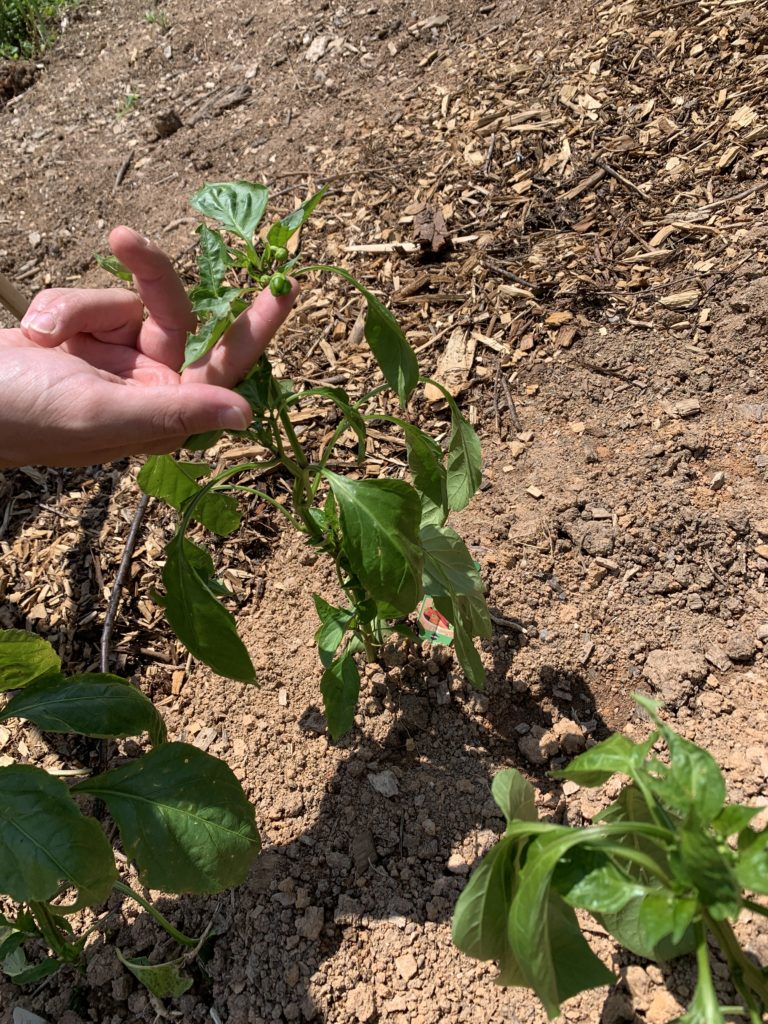
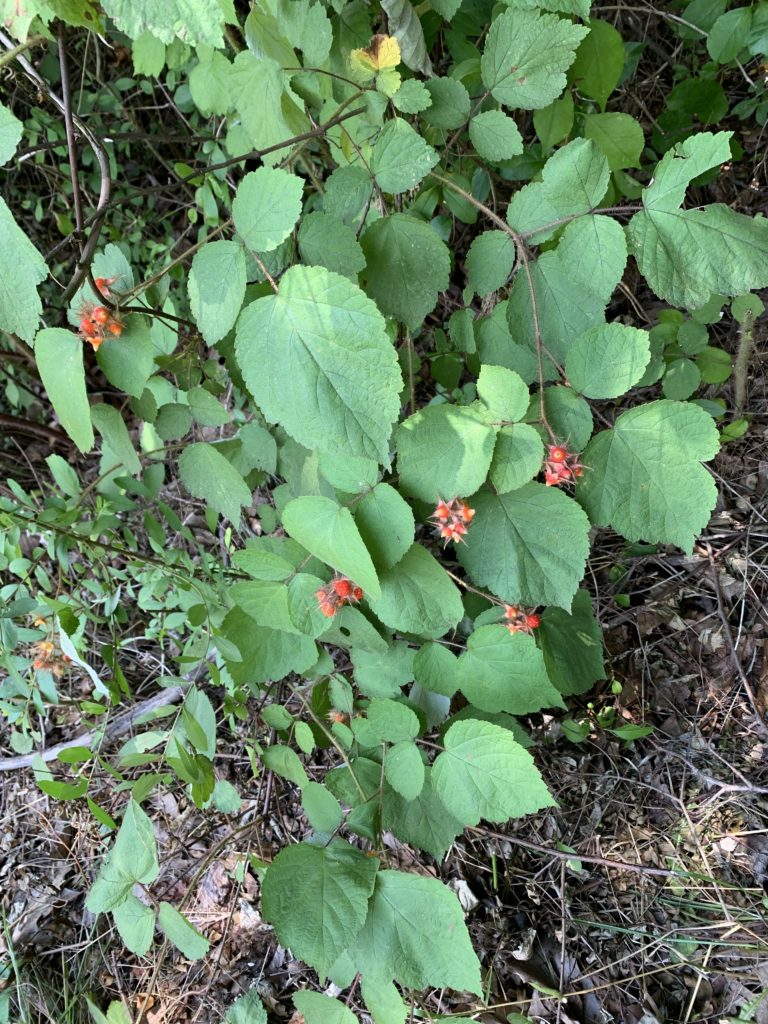
A hand gently touches a small green pepper growing on a pepper plant in a sunlit garden with brown soil and wood mulch in the background.      Green leafy plant with clusters of small, red, raspberry-like berries growing on thin stems. The plant is surrounded by forest floor debris and other greenery.

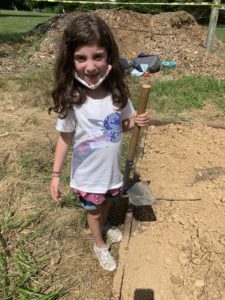
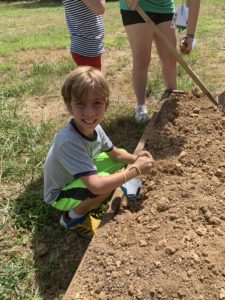
New this year, we partnered with the Jewish Seed Project, to grow biblical qishuim (cucumbers). “What we’re doing with the Jewish Seed Project as modern day Jewish farmers is reaching so far back into our own history to pull these seeds into the present, so we can share them with the future.”  Below are pictures of our chanichim planting the seeds in a special plot away from the gan.  Keeping them separate from other plants ensures they remain pure.
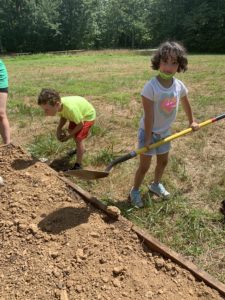
Two children are working outdoors in a grassy area. One child holds a shovel and looks at the camera, while the other scoops dirt with their hands. They are near a pile of soil. Trees are visible in the background.     A young girl with long brown hair smiles while holding a shovel and standing on a patch of dirt outdoors. She wears a white T-shirt, shorts, sandals, and a face mask under her chin. There are wood chips and grass in the background.     

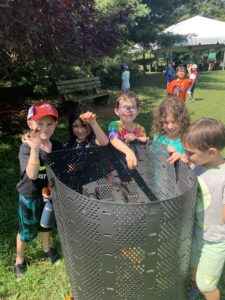
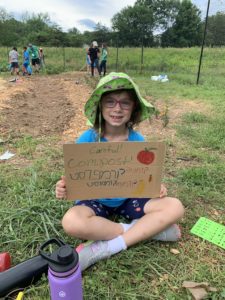
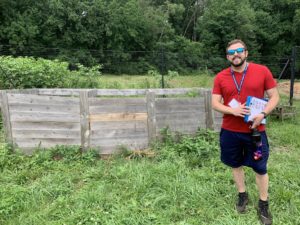
Beyond the gan, our teva program teaches about composting, recycling, and the natural habitat at Wellspring.  Through hands-on experiences unique to camp, chanichim are learning how to love the earth and keep it beautiful for generations to come.


Categories: Program Highlights
Share: